Curatorial Narrative
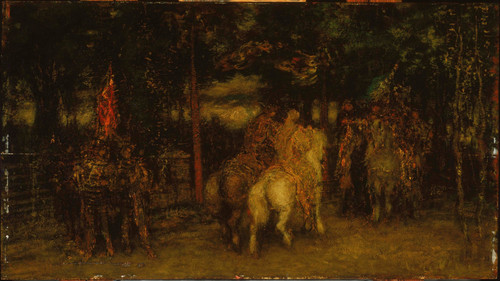
Figures near a Fountain by Adolphe Monticelli occupies a pivotal position in the transition from Realism to Impressionism. Executed between 1870 and 1886, this painting embodies the artist's innovative approach to capturing light and atmosphere through thick, impasto brushstrokes that imbue the scene with a sense of dynamic energy.
The palette, dominated by darks and greens, creates a somber yet contemplative mood, while subtle hints of reds and yellows in foliage and figures inject a touch of vibrancy. This chromatic structure generates an atmospheric weight that draws the viewer's gaze into the depths of the composition, where the interplay between light and shadow becomes almost palpable.
The painting's modernist design sensibilities are evident in its use of negative space to create a sense of spatial rhythm, which is further emphasized by the artist's deployment of color masses to define depth. This structural approach imbues the painting with a level of abstraction that transcends traditional representational art.
When enlarged to 44x76 inches, the painting's dramatic presence becomes even more pronounced. The dark greens and blues of the surrounding foliage appear almost three-dimensional, while the warm tones of the figures and the fountain create a striking visual contrast. In a luxury interior environment, this artwork would pair ideally with materials that reflect its modernist sensibilities, such as matte black or gray metallic finishes on furniture and accents.
The spatial impact of Figures near a Fountain is considerable, creating a focal point in any room while also encouraging movement through the space. Lighting behavior plays a crucial role in enhancing the painting's visual effects, particularly when positioned to highlight the interplay between light and shadow on the figures' faces and clothing. The overall effect is one of dynamic tension, as if the very atmosphere within the room has been transformed by the presence of this captivating work of art.
In terms of material pairing, a luxurious velvet or linen upholstery would complement the painting's somber yet elegant mood, while a sleek metal or glass coffee table would provide a striking contrast to its rich textures. The overall aesthetic is one of refined sophistication, as if the very essence of modernist design has been distilled into this singular work of art.
The chromatic structure of Figures near a Fountain also has a profound impact on the surrounding space, creating an almost palpable sense of atmospheric weight that draws the viewer's gaze inexorably towards the central fountain. This effect is heightened when paired with materials that reflect its modernist sensibilities, such as matte black or gray metallic finishes on furniture and accents.
In a luxury interior environment, Figures near a Fountain would serve as a visual anchor, drawing attention to specific areas of the room while also creating a sense of spatial rhythm through its use of negative space. The painting's dramatic presence would be further enhanced by strategic lighting placement, which would highlight the interplay between light and shadow on the figures' faces and clothing.
Ultimately, Figures near a Fountain is not merely a work of art but a designed object that occupies a unique position in the history of modernist landscape painting. Its innovative use of color and composition creates a visual experience that is at once contemplative and dynamic, inviting the viewer to engage with its atmospheric weight and spatial rhythm on multiple levels.
When enlarged to 44x76 inches, Figures near a Fountain assumes an imposing presence within any room, its dark greens and blues dominating the surrounding space while the warm tones of the figures and fountain create a striking visual contrast. In a luxury interior environment, this artwork would pair ideally with materials that reflect its modernist sensibilities, such as matte black or gray metallic finishes on furniture and accents.
The painting's use of impasto brushstrokes imbues the scene with
This edition's spatial clarity and controlled palette align naturally with modernist interiors.
Architectural Behavior
Its vertical rise introduces a stabilizing architectural counterpoint.
This edition functions as a 44x76 interior anchor, shaping spatial rhythm and establishing a stable visual cadence within the surrounding architecture.
Its chromatic structure responds to natural and artificial lighting, modulating depth and atmospheric weight throughout the day.
Recommended material pairings include natural oak, brushed metal, matte stone composites, and textured linen surfaces.
Gallery Edition Specifications
- Format: 44" x 76" Interior Architectural Study
- Medium: 330gsm Ultra-Premium Fine Art Matte
- Ink System: Wide-gamut archival pigment curation
- Mounting: Delivered unframed for professional gallery installation
Each edition is prepared to order. Gallery-standard quality control requires 3 to 5 business days.