Curatorial Narrative
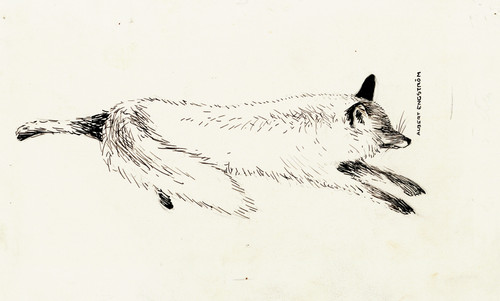
In the context of early 20th-century Swedish art, "Hunting Life" by Albert Engström occupies a pivotal position, navigating the boundaries between realism and modernism. Executed in 1902, this work embodies the artist's unique blend of fine brushwork and dynamic composition, characteristic of his figurative style. The black-and-white palette, while seemingly austere, imbues the subject with an atmospheric weight that draws the viewer into the narrative.
As a designed object, "Hunting Life" assumes a new dimension when enlarged to 58x44 inches. At this scale, the chromatic structure of the black-and-white palette reveals its full capacity for dramatic contrast and tonal nuance. The spatial rhythm established by Engström's composition becomes increasingly complex, as the viewer is led through the narrative with a sense of depth and movement. In a luxury interior environment, this print would pair strikingly with materials such as matte-black metal or dark-stained wood, while its atmospheric weight would be complemented by subtle, ambient lighting that avoids direct confrontation. As a result, "Hunting Life" assumes a commanding presence within the space, influencing spatial impact and material pairing in a manner both deliberate and thought-provoking.
The subject's spatial relationships become increasingly apparent at large scale, as the viewer is able to appreciate the interplay between figures and environment. Engström's use of negative space creates a sense of tension, drawing attention to the narrative's emotional core. In an interior context, this print would function as a focal point, its stark black-and-white palette serving as a counterpoint to surrounding materials and colors.
In terms of spatial impact, "Hunting Life" would occupy a prominent position within the room, asserting itself through its bold composition and dramatic lighting behavior. As a designed object, it would interact with adjacent surfaces in a complex dance of light, shadow, and materiality, generating an atmosphere of quiet contemplation and engagement.
Engström's use of black-and-white palette is not merely a stylistic choice but rather a deliberate attempt to underscore the narrative's themes and emotional resonance. At large scale, this decision becomes even more pronounced, as the viewer is able to appreciate the full range of tonal values and contrasts that underpin the subject matter.
In an interior context, "Hunting Life" would require consideration for surrounding materials and lighting conditions in order to optimize its spatial impact and material pairing. A thoughtful approach to adjacent surfaces and ambient illumination would allow this print to assert itself as a commanding presence within the space, influencing viewer experience through a nuanced interplay of light, shadow, and atmosphere.
The artist's use of black-and-white palette serves to underscore the narrative's themes of drama, tension, and emotional depth. As "Hunting Life" assumes its place within a luxury interior environment, it would function as a focal point for spatial rhythm, chromatic structure, and atmospheric weight, engaging the viewer through its bold composition and deliberate material interactions.
The 58x44-inch format allows Engström's unique blend of realism and modernism to unfold with increased complexity. As the viewer is drawn into the narrative, they are met with a spatial rhythm that is both dynamic and contemplative, inviting reflection on the subject matter and emotional resonance.
Engström's composition navigates the boundaries between realistic representation and modernist experimentation. At large scale, this print would occupy a unique position within the room, asserting itself through its bold use of negative space and atmospheric weight.
The artist's deliberate use of black-and-white palette imbues "Hunting Life" with an otherworldly quality, drawing attention to the narrative's emotional core. In a luxury interior environment, this print would function
This edition's spatial clarity and controlled palette align naturally with modernist interiors.
Architectural Behavior
Its horizontal span reinforces axial movement across long architectural planes.
This edition functions as a 58x44 interior anchor, shaping spatial rhythm and establishing a stable visual cadence within the surrounding architecture.
Its chromatic structure responds to natural and artificial lighting, modulating depth and atmospheric weight throughout the day.
Recommended material pairings include natural oak, brushed metal, matte stone composites, and textured linen surfaces.
Gallery Edition Specifications
- Format: 58" x 44" Interior Architectural Study
- Medium: 330gsm Ultra-Premium Fine Art Matte
- Ink System: Wide-gamut archival pigment curation
- Mounting: Delivered unframed for professional gallery installation
Each edition is prepared to order. Gallery-standard quality control requires 3 to 5 business days.