Curatorial Narrative
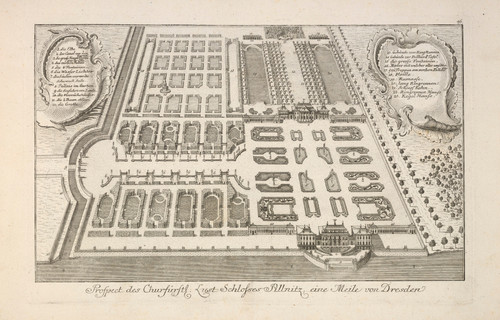
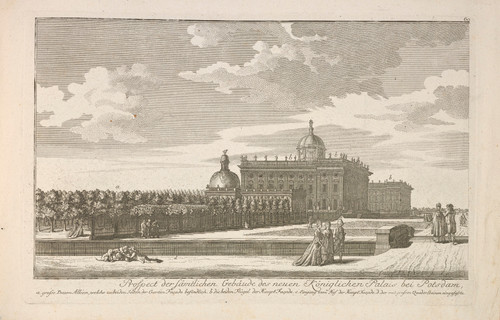
The anonymous artist's "Architecture of German cities Pl.18" is a product of the 18th century, an era that saw the rise of Baroque interior design, characterized by grandiose ornamentation and spatial complexity.
In this work, we observe the artist's masterful employment of linear brushwork, which imbues the composition with a sense of dynamism and visual tension. The monochromatic palette, executed in sepia tones, lends an air of antiquity to the subject matter, inviting the viewer to contemplate the passage of time on the urban landscape.
The 18th century was a period marked by rapid urbanization and the emergence of grand civic architecture, which inspired artists to reimagine the built environment. "Architecture of German cities Pl.18" is a testament to this fascination, capturing the intricate details and ornate facades that defined the era's architectural vocabulary.
As one contemplates this work in detail, it becomes clear that the artist has carefully calibrated the chromatic structure to evoke a sense of spatial rhythm, drawing the viewer's eye through the composition like a gentle current. The monochromatic palette creates an atmospheric weight that is both immersive and contemplative, inviting the viewer to slow their pace and absorb the intricate details.
Upon enlargement to 68x44, the spatial depth of "Architecture of German cities Pl.18" becomes even more pronounced, with the ornate facades seeming to recede into the distance like a shimmering mirage. The linear brushwork takes on a new level of expressiveness, imbuing the composition with a sense of kinetic energy that belies its static nature.
In a luxury interior environment, "Architecture of German cities Pl.18" would be a powerful design element, pairing seamlessly with rich materials such as dark wood and luxurious textiles to create an atmosphere of opulent refinement. The monochromatic palette would provide a subtle yet sophisticated backdrop for the display of precious objects or artwork, while the spatial depth would create a sense of visual interest that draws the viewer's eye around the room.
The lighting behavior in this work is noteworthy, with the soft, diffused tones creating an ambient glow that seems to emanate from within the composition itself. This effect would be heightened in a well-lit interior environment, where the artwork could serve as a focal point for the surrounding space.
Ultimately, "Architecture of German cities Pl.18" is a masterful exercise in spatial manipulation, one that rewards close attention and contemplation. As a designed object, it invites the viewer to engage with its intricate details and ornate facades, creating an immersive experience that lingers long after the artwork has been absorbed into its surroundings.
Upon enlargement, the compositional structure of "Architecture of German cities Pl.18" reveals itself to be a complex interplay of visual elements, each carefully calibrated to create a sense of spatial rhythm and atmospheric weight. The linear brushwork, monochromatic palette, and ornate facades all contribute to this effect, imbuing the composition with a sense of dynamic energy that is both captivating and thought-provoking.
The anonymous artist's use of spatial depth in "Architecture of German cities Pl.18" creates an intriguing paradox: despite its static nature, the composition seems to recede into the distance like a shimmering mirage. This effect would be particularly striking in a luxury interior environment, where the artwork could serve as a focal point for the surrounding space and create a sense of visual interest that draws the viewer's eye around the room.
In a well-lit interior environment, "Architecture of German cities Pl.18" would come alive with an ambient glow that seems to emanate from within the composition itself. This effect would be heightened by
This edition adapts fluidly across contemporary interior profiles, offering a stable architectural anchor.
Architectural Behavior
Its horizontal span reinforces axial movement across long architectural planes.
This edition functions as a 68x44 interior anchor, shaping spatial rhythm and establishing a stable visual cadence within the surrounding architecture.
Its chromatic structure responds to natural and artificial lighting, modulating depth and atmospheric weight throughout the day.
Recommended material pairings include natural oak, brushed metal, matte stone composites, and textured linen surfaces.
Gallery Edition Specifications
- Format: 68" x 44" Interior Architectural Study
- Medium: 330gsm Ultra-Premium Fine Art Matte
- Ink System: Wide-gamut archival pigment curation
- Mounting: Delivered unframed for professional gallery installation
Each edition is prepared to order. Gallery-standard quality control requires 3 to 5 business days.