Curatorial Narrative
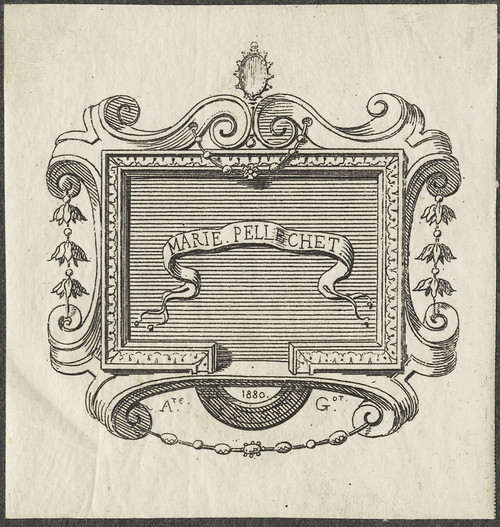
Ekslibris Józefa Sapiehy, an enigmatic etching from the mid-eighteenth century, occupies a unique position within the realm of fine art. Created during the transitional period between Baroque and Rococo styles, this anonymous work demonstrates a sophisticated understanding of visual mechanics. The linear brushwork, characteristic of the era's printmaking techniques, imbues the image with a sense of restraint and control.
The subject matter, an architectural rendering of a façade or interior, engages with the viewer through its geometric composition and use of negative space. The black-and-white palette, while stark in appearance, creates a tension between light and shadow that draws the eye towards the central axis. As we examine this enigmatic work more closely, its atmospheric weight becomes apparent: the faintest hints of texture and the suggestion of atmospheric perspective imbue the image with a subtle depth.
When enlarged to 44x46, Ekslibris Józefa Sapiehy exhibits an intriguing transformation in spatial behavior. The chromatic structure, initially austere, begins to reveal its intricacies as the black lines seem to vibrate against the white background, creating a tension that recalls the play of light on architectural surfaces. This visual dynamic would pair particularly well with materials featuring high-gloss finishes, such as lacquer or polished metal, which would enhance the work's atmospheric weight.
In luxury interior environments, Ekslibris Józefa Sapiehy assumes an almost sculptural presence, its spatial rhythm harmonizing with carefully selected furnishings and lighting arrangements. Strategically positioned to draw the eye towards a focal point, this etching creates a sense of visual flow that can be subtly influenced by the surrounding décor. The atmospheric perspective in the work, harking back to the era's fascination with naturalistic representation, could be complemented by materials exhibiting subtle texture or patina, such as aged wood or worn stone.
Considered within its historical context, this anonymous etching offers a fascinating case study on the evolution of visual language during the mid-eighteenth century. Through its linear brushwork and geometric composition, Ekslibris Józefa Sapiehy embodies the era's increasing preoccupation with order and rationality, while also betraying a nascent interest in atmospheric effects.
This edition's spatial clarity and controlled palette align naturally with modernist interiors.
Architectural Behavior
Its vertical rise introduces a stabilizing architectural counterpoint.
This edition functions as a 44x46 interior anchor, shaping spatial rhythm and establishing a stable visual cadence within the surrounding architecture.
Its chromatic structure responds to natural and artificial lighting, modulating depth and atmospheric weight throughout the day.
Recommended material pairings include natural oak, brushed metal, matte stone composites, and textured linen surfaces.
Gallery Edition Specifications
- Format: 44" x 46" Interior Architectural Study
- Medium: 330gsm Ultra-Premium Fine Art Matte
- Ink System: Wide-gamut archival pigment curation
- Mounting: Delivered unframed for professional gallery installation
Each edition is prepared to order. Gallery-standard quality control requires 3 to 5 business days.